
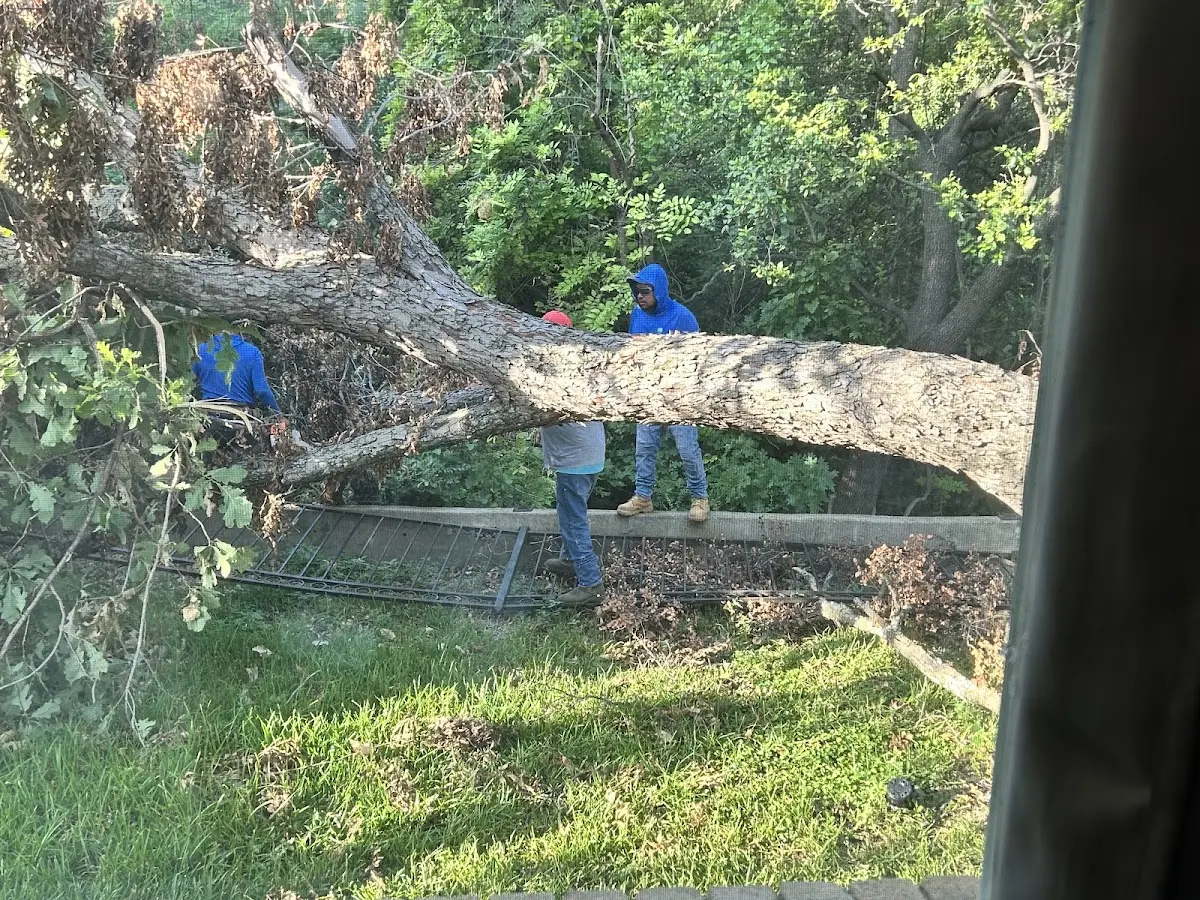
Professional dead tree removal for homes and businesses in Cook and surrounding Nebraska communities.
B. Haney and Sons Arborists provides expert dead tree takedowns throughout Cook, NE. Dead trees often look like ordinary tree work to non-arborists, but they require very different handling — wood integrity testing, careful rigging, and frequent crane usage. Our arborists know the difference and execute accordingly.
Cook homeowners and businesses count on careful, professional dead tree removal to protect their properties and their tree investments. Serving a village of 310 across Nebraska, B. Haney and Sons Arborists brings the experience, equipment, and crew capacity to handle dead tree removal projects of any scale. We begin every job with an honest evaluation, walk the property with you, and provide a clear written estimate before any cuts are made.
Our dead tree removal crews in Cook, NE are ISA-trained, fully insured, and equipped with bucket trucks, climbing gear, chippers, and stump grinders sized for the job. From the initial assessment through final cleanup, we maintain open communication and hold ourselves to ANSI A300 and Z133 industry standards. That is how B. Haney and Sons Arborists has earned the trust of property owners across Nebraska.
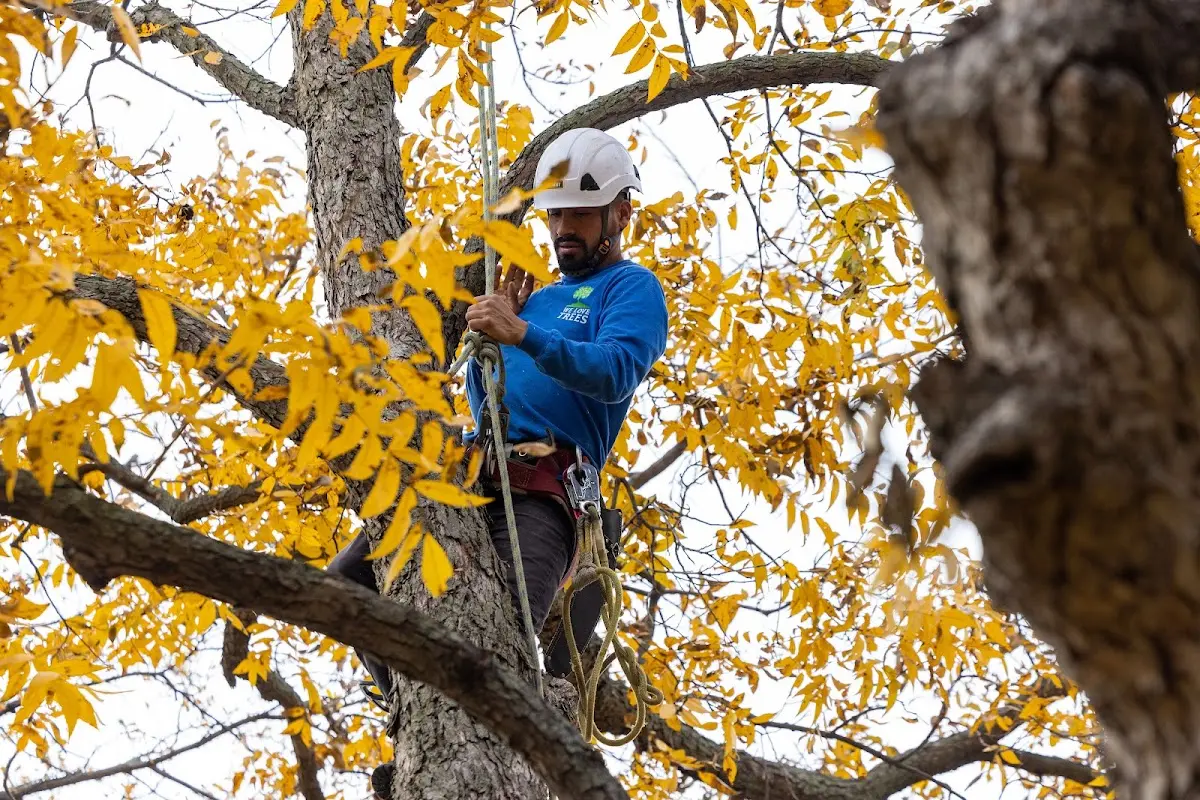
Our proven dead tree removal process delivers reliable results for Cook property owners every time.
B. Haney and Sons Arborists begins every dead tree removal project with an on-site assessment. We walk the property with you, evaluate every tree involved, and discuss the recommended approach for your Cook, NE project.
We provide a clear written estimate covering scope, equipment, timeline, and cleanup — no hidden fees. Once approved, we schedule the work at your convenience.
Our Cook crew shows up when promised, sets up the site safely, and works with the equipment and rigging your specific job requires. ISA-trained arborists make every cut intentionally.
B. Haney and Sons Arborists finishes every dead tree removal job in Cook with thorough cleanup. We rake the work area, sweep walks and driveways, and leave the site looking better than when we arrived. Final walkthrough always included.
Have questions about dead tree removal in Cook, NE? Start here.
The cost of dead tree removal in Cook depends on tree size, species, access, equipment required, and whether stump removal is included. B. Haney and Sons Arborists provides free written estimates with transparent pricing so you know exactly what to expect before any work begins. We work in a wide range of budgets and never quote blind.
B. Haney and Sons Arborists crews working dead tree removal jobs in Nebraska are led by ISA-trained arborists who follow ANSI A300 pruning standards and ANSI Z133 safety standards. Individual ISA certifications vary by team member, but every crew leader has the training to plan and execute the work properly.
Most dead tree removal jobs in Cook, NE are completed in a single day, with cleanup finished by close of business. Larger or more complex projects involving cranes, multiple trees, or specialized equipment may take 2 to 3 days. We provide a clear timeline during the estimate.
For non-emergency dead tree removal in Cook, we typically schedule within 1 to 2 weeks of estimate approval. For emergency tree work, our crews can usually arrive within 1 to 4 hours of the call. Schedules tighten significantly during storm weeks across Nebraska.
Our reputation is built on results. Here is what our customers have to say.
"Good quality tree work. Pruning was done well and the trees look great. Office communication was a little slow at the start, but once the crew was on-site everything went smoothly. Reasonable pricing too."
"Hazardous tree removal on a leaning oak threatening our house. Crew arrived on time with proper equipment, rigged everything down in sections, and the property was completely safe the entire time. Great communication from quote through cleanup."
"Haney and Sons saved a 100-year-old elm on our property. Other companies told us to take it down. Their arborist did a careful evaluation, recommended cabling and a treatment plan, and the tree is thriving three years later. This is what 85 years of tree care knowledge looks like."